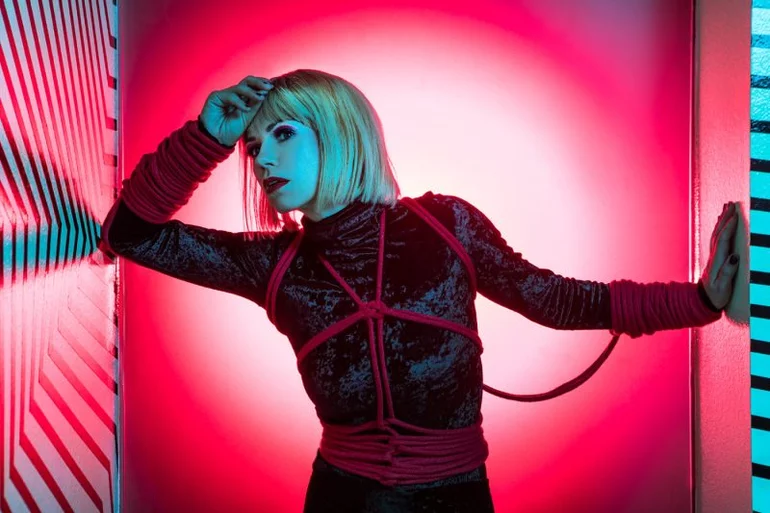




In the early 2010s, Butcher Babies were discussed less because of their songs than because of the stage outfits worn by Heidi Shepherd and Carla Harvey—or rather, the almost complete absence of outfits. The vocalists appeared before the audience with strips of black duct tape across their chests, covered in fake blood, and took turns attacking the microphone with screams. Many considered it a cheap provocation. In reality, it was a direct reference to Wendy O. Williams of Plasmatics, one of the most uncompromising figures in American punk rock.
The name also came from Plasmatics—from the song “Butcher Baby.” Shepherd and Harvey never concealed the source: they were interested not in nudity itself, but in Williams’s refusal to look and sound the way the industry demanded. Heidi later remarked that Wendy O. “crawled so we could run.” The duct tape eventually disappeared. The name remained.
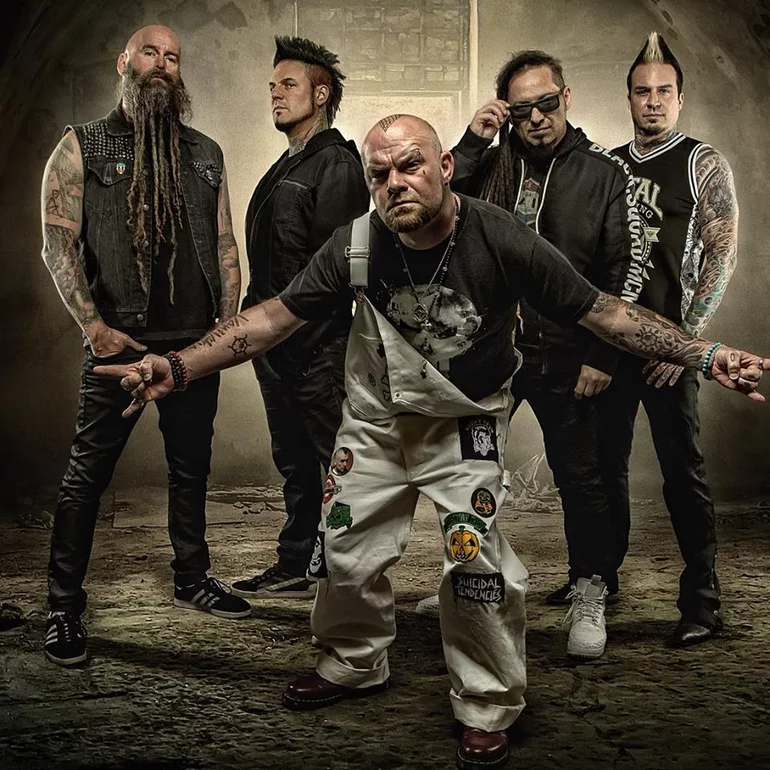
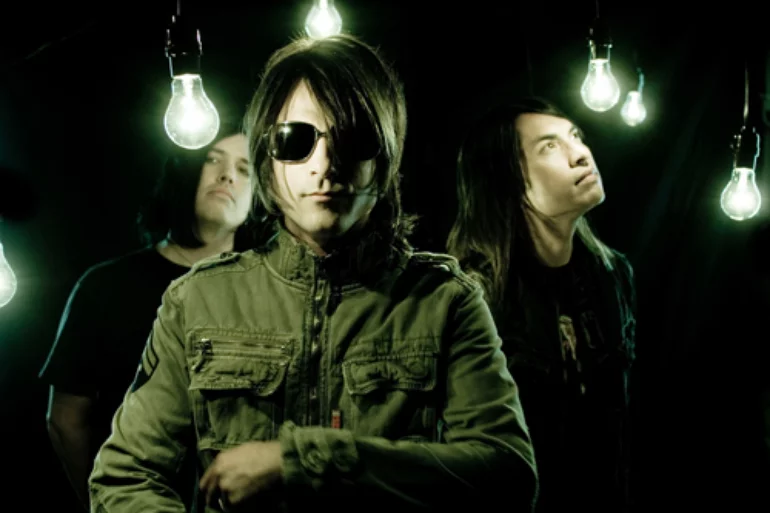
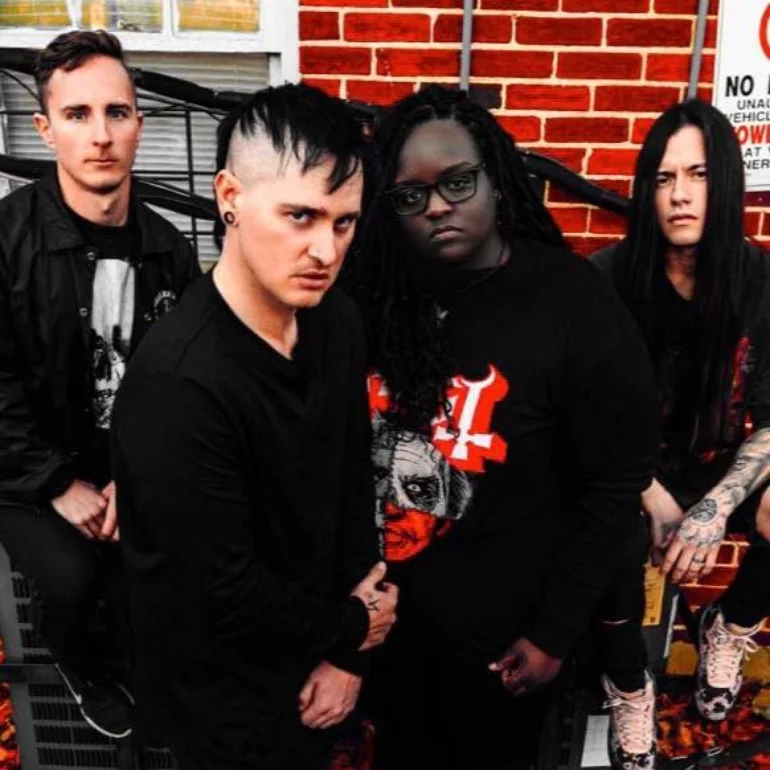
The band formed in Los Angeles in 2010. Alongside the two frontwomen, the first stable lineup included guitarist Henry Flury, bassist Jason Klein, and drummer Chris Warner. The music combined Pantera grooves, thrash speed, metalcore breakdowns, and Rob Zombie-style horror theater. A video of the band performing “Fucking Hostile” live quickly spread across YouTube. It was simple: the two vocalists looked like heroines from a bloody comic book and sounded as if they intended to tear the venue apart before the song ended.
Carla Harvey had been fascinated by horror and drawing since childhood, so Butcher Babies’ visual universe extended beyond concert makeup. In July 2011, a comic book written by Harvey and illustrated by Anthony Winn was presented at San Diego Comic-Con. The young band did not yet have a studio album, but it already had its own printed mythology. For a group inspired by “The Texas Chainsaw Massacre” and “House of 1000 Corpses,” the order of events made perfect sense.
The first independent EP was released on May 29, 2012. It was produced by Andrew “Mudrock” Murdock, who had previously worked with Godsmack and Avenged Sevenfold. The release included “Axe Wound,” “Mr. Slowdeath,” “Jesus Needs More Babies for His War Machine,” and the short “National Bloody Anthem.” “Mr. Slowdeath” was the first song to show that behind the theatrical façade was a disciplined metal band.
In November 2012, Butcher Babies signed an international deal with Century Media. That winter, they went on a North American tour with Marilyn Manson, and almost immediately after it ended, they entered the studio with Josh Wilbur—the producer of Lamb of God, Gojira, and Hatebreed.
The debut full-length album, “Goliath,” appeared on July 9, 2013. Around 3,300 copies were sold in the United States during its first week: the album reached No. 112 on the Billboard 200 and No. 3 on the Heatseekers chart. These were not arena-level numbers, but they were convincing enough for a band that had only recently been distributing its recordings independently.
“I Smell a Massacre,” “Magnolia Blvd.,” and “The Deathsurround” were built on heavy grooves, bursts of speed, and a constant exchange of lines between Shepherd and Harvey. Their voices served different functions: Heidi more often delivered a high, cutting scream, while Carla added lower parts and a darker tone. The two frontwomen were not a decorative doubling, but the band’s main arranging instrument.
The weak point of “Goliath” was found in the same place as its strength: the desire to fit Pantera, Slipknot, melodic metal, and punk chaos into every track sometimes overloaded the material. Onstage, however, that density became an advantage. There was no room for silence. None at all.
On September 30, 2014, the EP “Uncovered” was released, produced by Logan Mader. Each member chose one song by another artist. Alongside ZZ Top, Napoleon XIV, Suicidal Tendencies, and Stormtroopers of Death appeared—unexpectedly—The Osmonds with the song “Crazy Horses.”
Heidi Shepherd found “Crazy Horses” among her parents’ records and eight-track tapes when she was eight or nine years old. For a girl from Provo, it was the heaviest music she had ever heard at the time. Butcher Babies’ version turned the original into a fast thrash number. Donny Osmond approved of the result and jokingly asked what “Puppy Love” would sound like if recorded the same way.
Carla chose “They’re Coming to Take Me Away, Ha-Haaa!” by Napoleon XIV. Her stepfather constantly played the song in the car, tapping the rhythm on the steering wheel. A childhood memory of a song about a psychiatric hospital became a metal video with millions of views years later. Family nostalgia comes in many forms.
The second album was recorded from November 2014 through April 2015 under the direction of Logan Mader. “Take It Like a Man” was released on August 21, 2015, reaching No. 76 on the Billboard 200, No. 5 on the Independent Albums chart, and No. 8 on the Hard Rock Albums chart. It was the band’s best result on the main American chart.
The title came from a sexist remark Carla Harvey heard from someone in the industry: if she wanted to work in heavy music, she would have to “take it like a man.” Butcher Babies turned the condescending phrase into an album title. “Monsters Ball,” “Never Go Back,” and “Igniter” sounded more focused than the debut, while the re-recorded “Blonde Girls All Look the Same” returned to the first song the band had written.
The guitar parts became more technical and the vocal transitions cleaner, but Butcher Babies did not try to appear more respectable. Their music was still made for the stage, sweat, and circle pits—not for carefully studying the dynamic range through expensive headphones.
In 2017, Chris Warner left the drum position and was replaced by Chase Brickenden. The third album, “Lilith,” produced by Steve Evetts, was released on October 27. It reached No. 11 on the Independent Albums chart, No. 15 on the Hard Rock Albums chart, and No. 43 on the Top Rock Albums chart.
The record was more atmospheric and varied than its predecessors. On the title track and “Headspin,” extreme vocals stood alongside memorable clean parts, while electronic details stopped being incidental decoration. The sound did not become softer—it simply learned to leave space between the blows.
“Lilith” was the last album with bassist Jason Klein, who left in 2019. Ricky Bonazza replaced him. Then the touring machine stopped along with the rest of the world, and the forced hiatus stretched work on the next material to nearly four years.
Butcher Babies recorded the first batch of new songs back in 2019 in sunny Arizona. The release was planned for 2020, but the pandemic canceled touring and destroyed the schedule. Instead of waiting, the musicians continued writing. The second session took place in winter in Midland, Michigan. The mood changed so much that combining the material into a conventional record no longer made sense.
On July 7, 2023, the double project “Eye for an Eye… / …’Til the World’s Blind” was released. The first part, recorded in the Arizona heat, was shorter, brighter, and noticeably closer to alternative rock. The second contained 14 tracks and brought back a heavy, cold sound. The production was handled by Josh Schroeder and Matt Good.
Craig Mabbitt of Escape the Fate sang on “It’s Killin’ Time, Baby!,” while Chad Gray of Mudvayne and Hellyeah appeared on “This Is the Part.” “Red Thunder” was dedicated to Carla’s sister Julia, who was born with microcephaly and died in childhood. “Last December” grew out of an episode Heidi experienced involving suicidal thoughts in December 2019. Against the backdrop of those songs, the humorous “Beaver Cage” seemed almost like a necessary breather.
In the fall of 2023, Carla missed the European shows because of a detached retina and emergency surgery on her left eye. Butcher Babies toured with Fear Factory without her. In July 2024, the two sides officially announced their split after nearly fifteen years of working together.
The first statements were diplomatic: Harvey intended to devote more time to her work in the funeral industry and to helping people dealing with grief. She had studied mortuary science long before Butcher Babies became successful and later worked as a grief specialist. In subsequent interviews, however, Carla spoke more bluntly: after the medically necessary tour cancellation, she felt that she had been “gradually pushed out” of the band.
It is impossible to turn the split into a convenient story about peacefully changing priorities. Both explanations may have existed at the same time: Harvey genuinely wanted to return to working with death and grief, while also not intending to let others decide her musical future without her. She later created the project The Violent Hour. Butcher Babies continued with Heidi Shepherd as their only frontwoman.
The first track without Carla was “Sincerity,” released in November 2024 on Judge & Jury Records. The song was written by Heidi Shepherd and Henry Flury, with Howard Benson, Neil Sanderson, and Joe Rickard serving as producers. The material became more melodic, but not more restrained: clean vocals quickly shifted into screams, while electronics collided with Flury’s familiar groove.
On October 28, 2025, the experimental EP “Insincerity” appeared—six versions of the same composition, including the versions “You Were Never There for Me,” “The War You Started,” and “You Fooled Me Twice.” The idea was almost provocatively economical: one song taken apart from several emotional angles.
In 2026, “Lost in Your Touch,” “Black Dove,” and “Blame It on the Wind” followed. The last track gave its name to the four-song EP released on May 19. These recordings were created with the Judge & Jury team and became part of a new full-length project. The musicians initially planned to make a small EP, but a series of studio sessions grew into a completed album.
Heidi described the upcoming record as a musical autobiography covering roughly 25 years of her life—relationships, losses, and events she had never previously discussed publicly. By the summer of 2026, the recording had been completed, but an exact release date had not yet been announced. After the departure of the second vocalist, Butcher Babies did not search for a replacement copy of the old duo. Now there is one voice at the microphone. It has not made the noise any quieter.