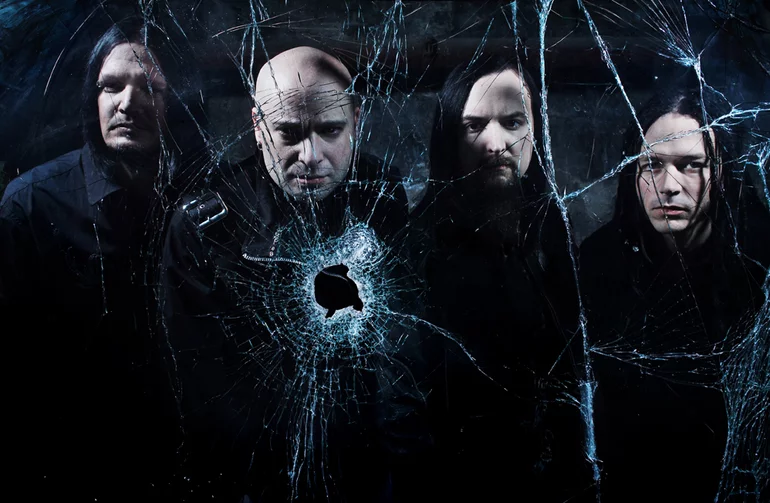
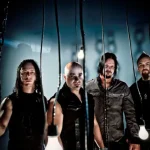
Disturbed’s most recognizable sound was not written in a studio notebook. During a rehearsal, David Draiman filled a pause in a new song with an improvised “ooh-wah-ah-ah-ah.” The musicians stopped and looked at the vocalist, checking whether he was all right. Draiman asked them to play it again. They kept the strange cry, named the song “Down with the Sickness,” and a quarter of a century later, listeners could recognize its opening within two seconds.
Disturbed did not emerge in Chicago overnight. In the first half of the 1990s, guitarist Dan Donegan, drummer Mike Wengren, and bassist Steve “Fuzz” Kmak played with vocalist Erich Awalt under the name Brawl. After Awalt left, the musicians placed an advertisement in the local publication Illinois Entertainer. Dozens of candidates auditioned. Most brought a list of cover songs. Draiman asked whether the trio had any original material.
He arrived for the audition in August 1996 wearing denim shorts, sandals, and a white T-shirt. The others looked as though they had just walked out of a Skid Row rehearsal. Their stylistic compatibility seemed questionable. But Draiman asked them to play a piece he did not know and came up with a melody on the spot. The first jam together turned into the song “Want,” which would later appear on the debut album. Brawl was renamed Disturbed.
Before signing with Giant Records, the quartet spent several years working through the old-school club circuit: printing flyers, distributing demos, and personally bringing people to their shows. Wengren later called Disturbed a “self-promotion machine.” The internet had not yet learned how to turn one successful video into a career, so listeners had to be brought to the stage almost literally.
The debut, “The Sickness,” recorded with producer Johnny K, was released on March 7, 2000. It brought together Donegan’s syncopated riffs, Wengren’s almost tribal style, and Draiman’s choppy vocal rhythm. “Stupify,” “Voices,” “The Game,” and “Down with the Sickness” placed Disturbed alongside Korn and early Slipknot, although the musicians themselves soon began resisting the nu-metal label.
The album climbed only to No. 29 on the Billboard 200, but remained on the chart for more than one hundred weeks. The slow result proved more reliable than a brief sensation: in the United States, “The Sickness” went five-times platinum, while “Down with the Sickness” later went eight-times platinum. The vocal cry that almost stopped the rehearsal became a lifelong trademark. Draiman joked that he was afraid of seeing it on his own gravestone.
The second album, “Believe,” appeared on September 17, 2002, and immediately topped the Billboard 200, selling approximately 284,000 copies in its first week. Johnny K returned to the producer’s chair, but the music was less tied to rap-metal techniques. Melody, traditional heavy metal, and themes of faith, death, and personal responsibility moved to the forefront.
The video for “Prayer” depicted an urban catastrophe and was conceived as a modern version of the biblical story of Job. After the September 11 attacks, MTV and several other channels considered the footage of collapsing buildings too painful. Disturbed were offered the chance to re-edit the video, but refused: editing it would have meant admitting that the original version was genuinely dangerous. As a result, one of the album’s major singles received limited television rotation precisely during an era when a video could still determine an album’s fate.
After the Music as a Weapon II tour, relations within the lineup deteriorated. In 2003, Steve Kmak was fired because of “personality differences.” The members chose not to turn the details into a public fight. John Moyer, who had previously played in The Union Underground, took his place.
“Ten Thousand Fists” was released on September 20, 2005, and became Moyer’s studio debut with the band. The record was dedicated to Dimebag Darrell, the Pantera and Damageplan guitarist who had been murdered in December 2004. The album again reached No. 1 on the Billboard 200, selling 239,000 copies in its first week.
“Stricken” added an almost classical metal solo to Disturbed’s music, while the Genesis cover “Land of Confusion” received an animated video by Todd McFarlane. The song topped Mainstream Rock. In 2006, the band performed at Ozzfest alongside System of a Down, Lacuna Coil, and DragonForce. Disturbed no longer needed the company of fashionable nu-metal acts: the quartet had built an audience of its own, one capable of filling an arena.
The musicians decided to produce the fourth album, “Indestructible,” themselves. The risk paid off. Released on June 3, 2008, the record topped the charts in the United States, Canada, Australia, and New Zealand. Approximately 253,000 copies were sold in its first week in the United States.
The material was heavier and darker than its predecessor. “Inside the Fire,” written around the subject of suicide, earned Disturbed their first Grammy nomination—in the Best Hard Rock Performance category. The title track was used to support military personnel; Draiman emphasized that it was aimed at people who needed a sense of inner invulnerability, not at any specific political campaign.
“Asylum,” released on August 31, 2010, was also recorded independently. It became Disturbed’s fourth consecutive album to top the Billboard 200. Only a handful of acts could boast such a streak in the SoundScan era. Inside the band, however, exhaustion was building: the endless “studio—interviews—bus—arena” cycle was working too efficiently.
In the fall of 2011, Disturbed announced an indefinite hiatus. The musicians denied rumors of a breakup, but gave no return date. In November, they released the collection of B-sides and rarities “The Lost Children,” after which the members turned to other projects. Draiman created the industrial project Device, while Donegan and Wengren formed Fight or Flight. Moyer played with Adrenaline Mob and Art of Anarchy.
Four years of silence proved more useful than another album recorded on schedule. In the summer of 2015, the Disturbed website displayed the mascot The Guy connected to life-support equipment. Each day, he became increasingly alert. On June 23, the musicians officially confirmed their return—with no prior leaks about a secret recording.
The album “Immortalized,” produced by Kevin Churko, was released on August 21, 2015. It debuted at No. 1 on the Billboard 200 with approximately 98,000 copies sold and became Disturbed’s fifth consecutive chart-topper. Before them, only Metallica and Dave Matthews Band had achieved a similar streak in modern chart statistics.
But the record’s biggest hit was not the heavy “The Vengeful One,” but a cover of Simon & Garfunkel’s “The Sound of Silence.” The arrangement began with piano and barely resembled the usual Disturbed sound. Draiman abandoned his rhythmic growl and demonstrated a range stretching from a low baritone to an almost operatic climax.
The cover climbed to No. 42 on the Billboard Hot 100—higher than any previous single by the band—and topped Mainstream Rock. After the performance on Conan on March 28, 2016, Paul Simon wrote to Draiman: “Really powerful performance.” The vocalist was ill that night, but the live version received the Grammy nomination. In 2024, the official video surpassed one billion views on YouTube.
“Evolution” was released on October 19, 2018, and justified its title literally. Kevin Churko helped the quartet expand the acoustic side of “The Sound of Silence”: alongside the heavy “Are You Ready” and “The Best Ones Lie” came the ballads “A Reason to Fight” and “Hold On to Memories.” The record was dedicated to the memory of Chester Bennington and Vinnie Paul.
The experiment divided the audience. Some heard the band maturing; others heard an attempt to repeat the success of a single cover. The album reached No. 4 on the Billboard 200, ending the run of No. 1 releases. “A Reason to Fight,” however, became the basis of a campaign against the stigma surrounding depression and addiction: at concerts, Draiman asked spectators to raise their hands if these issues had affected them personally. Usually, almost the entire arena raised a hand.
The eighth album, “Divisive,” appeared on November 18, 2022. Producer Drew Fulk, known as WZRD BLD, brought the guitars back to the forefront. “Hey You” topped Mainstream Rock Airplay, “Don’t Tell Me” was recorded with Ann Wilson of Heart, and “Bad Man” received a Grammy nomination for Best Metal Performance. The album reached No. 13 on the Billboard 200.
On February 21, 2025, Disturbed released “I Will Not Break,” their first recording on their own label, Mother Culture Records. The song was again produced by WZRD BLD. It became the band’s thirteenth single to top Billboard Mainstream Rock Airplay.
In March, the 40-track anniversary edition of “The Sickness” was released, featuring demos, B-sides, and a new version of “Glass Shatters,” which had once served as the entrance theme for wrestler Stone Cold Steve Austin. At the anniversary concerts, the debut was performed in full and in sequence, followed after a break by a second set of later hits. “Down with the Sickness” unexpectedly appeared not at the end, but in the first half of the evening. Even the musicians found that strange.
After completing the major tour, the quartet reduced its live activity: only two summer performances were scheduled for 2026. By then, enough material for a ninth album had been recorded, but no release date had been announced. Draiman described the new songs as “diverse, fresh, and powerful,” then added that listeners would have to wait a little longer. After thirty years, Disturbed can finally afford not to release an album simply because the calendar demands another one.