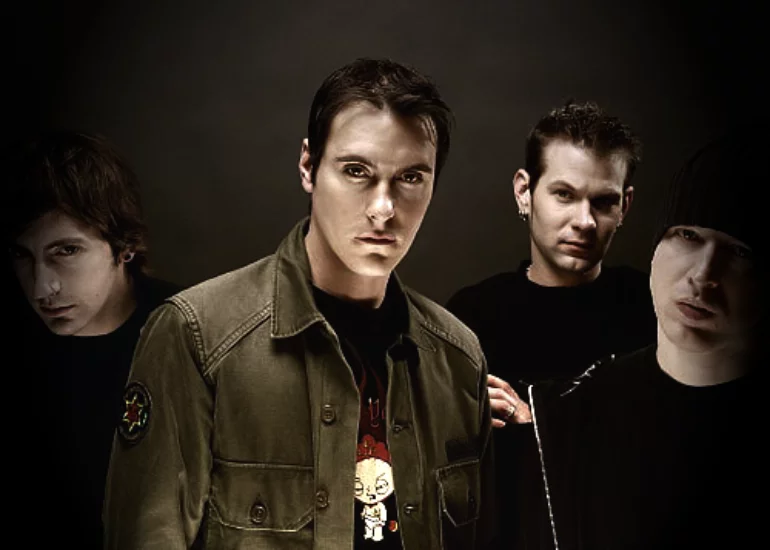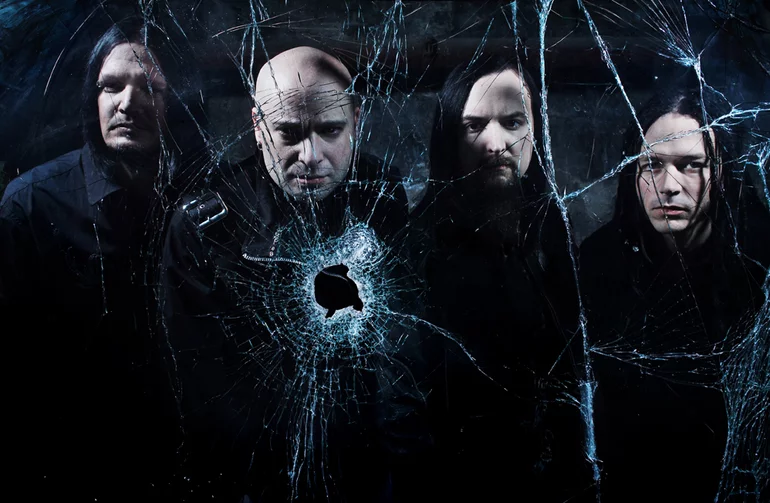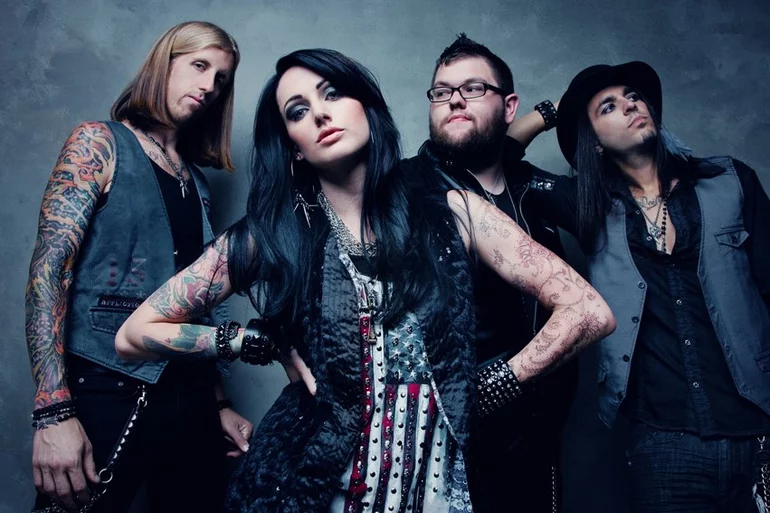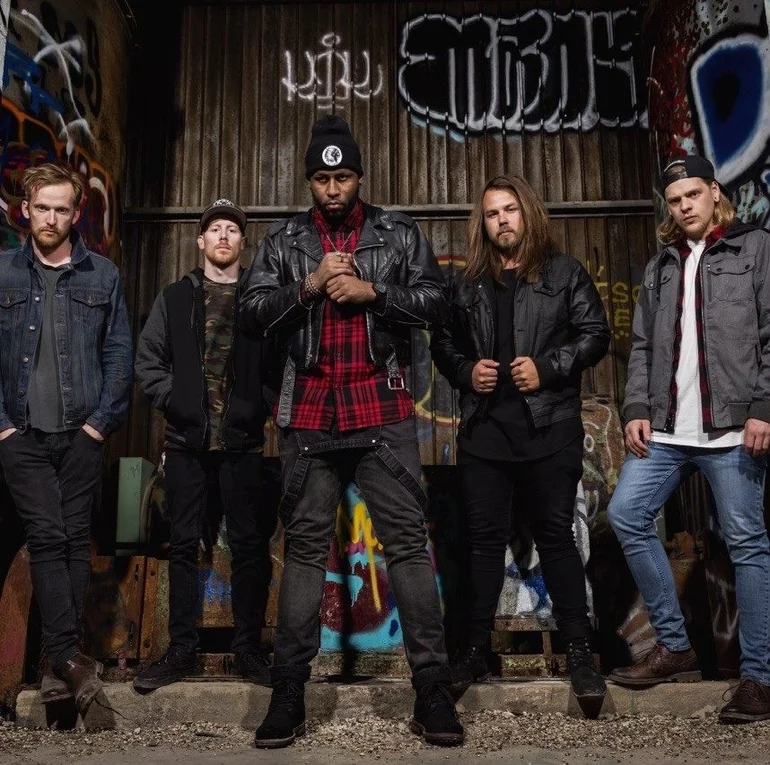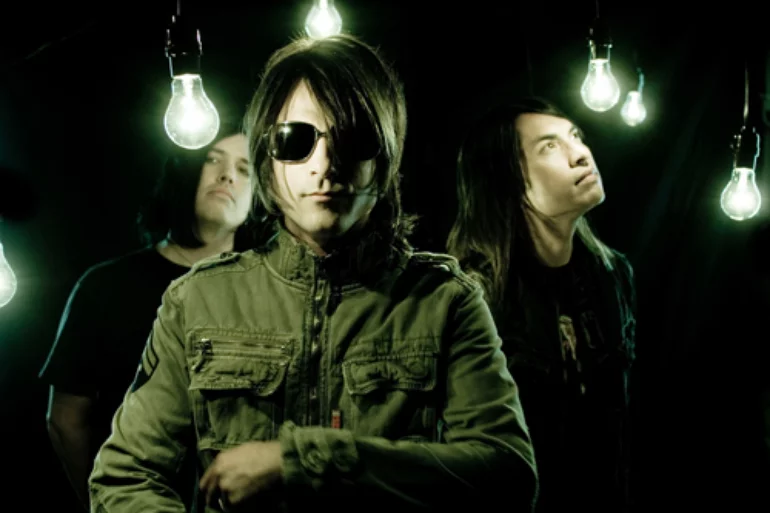
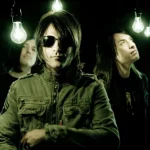
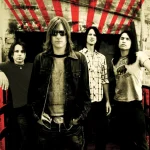
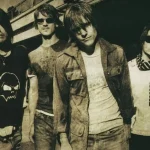
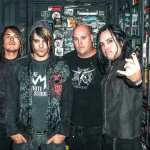
The name The Exies sounds like the surname of another Los Angeles punk band, but its source is the biography of John Lennon. In the early 1960s, musicians from The Beatles used the word “exies” to describe Hamburg art students interested in existentialism. Vocalist and guitarist Scott Stevens came across the story and decided he had found the last available name with at least some connection to The Beatles. Thus, the “existentialists” were reduced to two syllables. Convenient for posters. And it does not require listeners to read Sartre before the show.
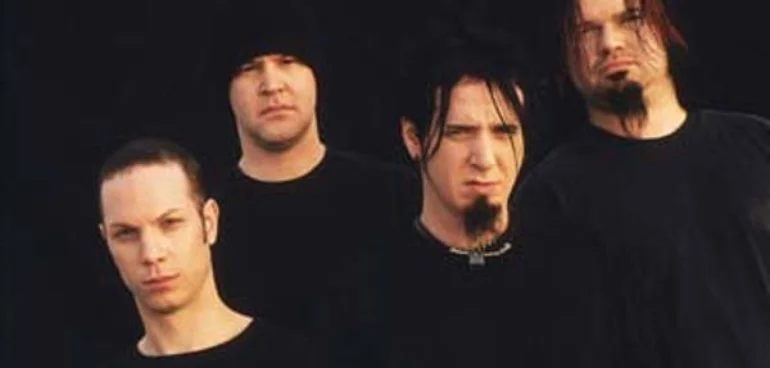
The Exies appeared in Los Angeles in 1997. Alongside Stevens, the first stable lineup consisted of bassist Freddy Herrera and drummer Thom Sullivan. Guitarist Chris Skane took part in an early version of the band but soon moved on to other things; David Walsh replaced him. The musicians combined the melodic discipline of The Beatles with the guitar architecture of Nirvana and The Smashing Pumpkins. Post-grunge, alternative metal, and that particular early-2000s radio format were later added to the mix, in which a heavy riff was expected to reach the chorus within forty seconds.
The self-titled album “The Exies” was released on March 28, 2000, through the independent label Ultimatum Records. The material was recorded in the summer of 1999, with Stephen Haigler serving as the main producer. The songs “Feeling Lo-Fi” and “Baby’s Got a New Revelation” showed a band that had not yet fully defined itself: nervous alternative rock in some places, careful pop melody covered by distorted guitars in others. The latter song even appeared in the short-lived UPN animated series “Gary & Mike.”
There was no commercial explosion, but The Exies toured extensively. At the City Stages festival in Birmingham, they were seen by Matt Serletic, the producer of Matchbox Twenty and a Grammy winner. He did not simply offer to work with them—he bought the musicians’ contract from the independent label. It was a rare case in which one successful festival set genuinely changed the entire band’s finances.
In September 2000, Thom Sullivan left, and Dennis Wolfe took over behind the drums. The quartet spent most of 2001 and the beginning of 2002 writing and recording material. Then came a deal with Virgin Records. The major-label machine finally switched on.
On January 7, 2003, Virgin released the second album, “Inertia,” produced by Matt Serletic. Unlike the almost live-sounding debut, it featured keyboards, string arrangements, and carefully constructed vocal layers. The producer did not polish The Exies into complete anonymity, however: the guitars remained sharp, while Stevens’s voice was just roughened enough to work both on rock radio and in teenage drama.
The lead single was “My Goddess.” The song climbed to No. 20 on the Billboard Mainstream Rock chart and No. 26 on Modern Rock. The album debuted at the top of the Heatseekers chart and reached No. 115 on the Billboard 200—the best result in the band’s history. “My Goddess” appeared in the PlayStation 2 game “Splashdown: Rides Gone Wild,” while “Without” was used in EA Sports’ “MVP Baseball 2003.”
In an era when compact discs still sold by the hundreds of thousands and music games and sports simulators served as radio stations for young listeners, such licenses carried real weight. The Exies did not become the new Nirvana, nor could they have: the industry already preferred controlled post-grunge. But “Inertia” turned them from a club band into a recognizable name in American modern rock.
In June 2004, the musicians entered the studio with Nick Raskulinecz, who by then had worked with Foo Fighters. The album “Head for the Door” was released in December of the same year. The sound became larger and closer to alternative metal: fewer decorative details, more riffs designed for arenas.
The first single, “Ugly,” became The Exies’ most successful radio song. It reached No. 11 on Mainstream Rock and No. 13 on Modern Rock. WWE chose the song as the theme for Survivor Series 2004, while The WB television network used it in a commercial. “Slow Drain” appeared in the video game “NFL Street 2,” and “Hey You” later featured in the first “Guitar Hero.”
A real arena career began. The Exies opened for Velvet Revolver, and then Nikki Sixx personally chose them for Mötley Crüe’s “Carnival of Sins” tour. From the outside, everything looked right: a radio hit, games, wrestling, and large venues. But after the tour ended, Virgin terminated the band’s contract. The music industry has a particularly effective way of slamming the door just when it seems to have finally opened.
David Walsh and Dennis Wolfe soon left. Scott Stevens and Freddy Herrera remained from the “Head for the Door” lineup, after which the band’s first guitarist, Chris Skane, returned. The musicians did not seek another major company and began working with producer James Michael in May 2006, later known for Sixx:A.M.
The fourth album received the cumbersome but accurate title “A Modern Way of Living with the Truth” and was released on May 15, 2007, through Eleven Seven Music. Stevens wanted it to combine “beauty and destruction.” The result was uneven: strong melodies stood beside material that was overly familiar from American radio at the time. Still, “Different Than You” reached No. 27 on Mainstream Rock, while the Talking Heads cover “Once in a Lifetime” showed that the band’s interests extended beyond the neighboring post-grunge shelf.
The Exies toured with Buckcherry, Papa Roach, Hinder, Three Days Grace, Smile Empty Soul, and Drowning Pool. In July 2007, a Bad Boys of Rock tour show in Michigan drew approximately 6,800 people. The songs continued appearing on game soundtracks: “Lay Your Money Down” was included in “WWE SmackDown vs. Raw 2009,” while an instrumental version of “Dose” appeared in the racing game “Baja: Edge of Control.”
After the “A Modern Way of Living with the Truth” cycle, the band’s activity gradually stopped. There was no formal dramatic breakup with a press release and accusations—the Exies simply stopped releasing music. In 2010, they played an unusual one-off show in Russia. According to Stevens’s later account, the musicians were paid $100,000 to perform only two songs. The details of this touring anecdote are difficult to verify, but as the final scene of the first period, it is almost too perfect.
Stevens shifted his focus to writing and producing for other artists. His first notable outside release was Theory of a Deadman’s song “Head Above Water,” which appeared on the soundtrack to “Transformers: Dark of the Moon.” He then worked with Halestorm, Shinedown, Nothing More, Daughtry, Skillet, Pop Evil, and other performers. For Halestorm’s album “Into the Wild Life,” he co-wrote eight songs, including “Apocalyptic” and “Amen.” The Exies frontman proved to be a highly successful writer of other people’s hits. He did not record his own voice for more than ten years.
The return began by accident. In the spring of 2020, Stevens’s production work stopped because of the pandemic. During a walk while wearing a mask, he heard a melody in his head and initially did not understand who it was meant for. Then he recognized his own voice. That was how “s.A.D.” came about—the first song in many years written not for a client. It led to the next composition, “Spirits High.”
On January 27, 2023, The Exies released “Spirits High”—their first new track in fifteen years. Freddy Herrera, Chris Skane, and Dennis Wolfe returned alongside Stevens. “For What It’s Worth” and “s.A.D.” followed, and on June 28, 2024, the six-track EP “Closure” was released. Its 23 minutes also included “Euphoria,” “The Hill,” and the title track.
The title “Closure” can be translated as “completion” or “finding a sense of resolution.” The musicians did not use it to bury the project, however. Stevens explained the idea as freeing oneself from the past before moving on to the next chapter. He cautiously discussed new shows, considering how to make touring financially viable. The romance had returned. So had the accounting.