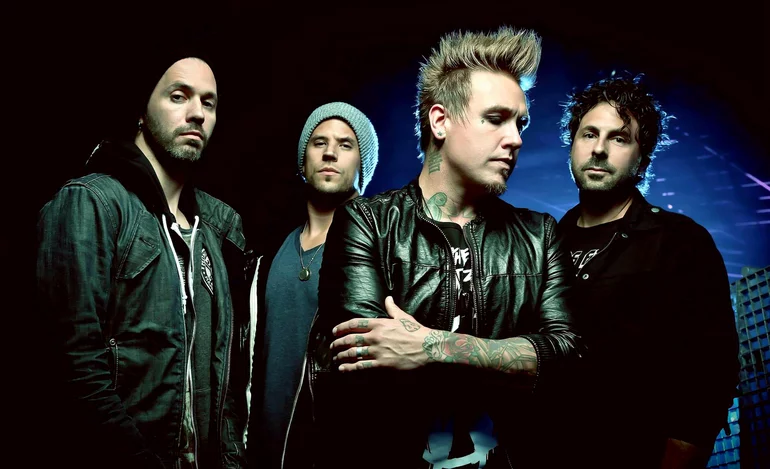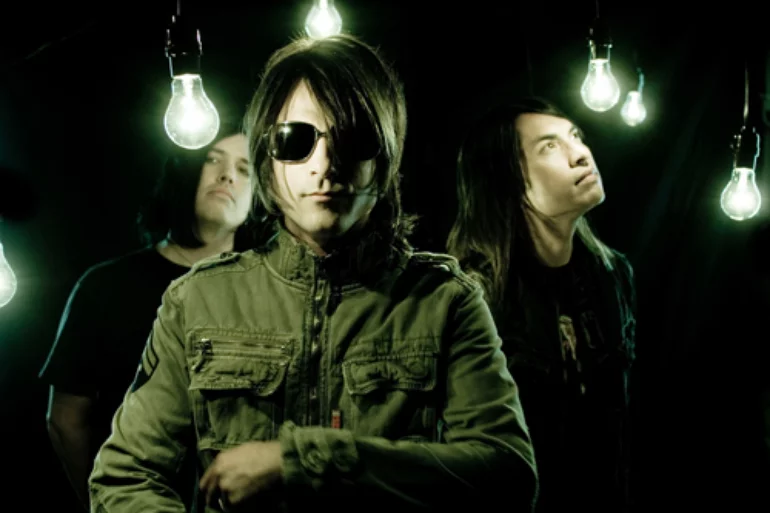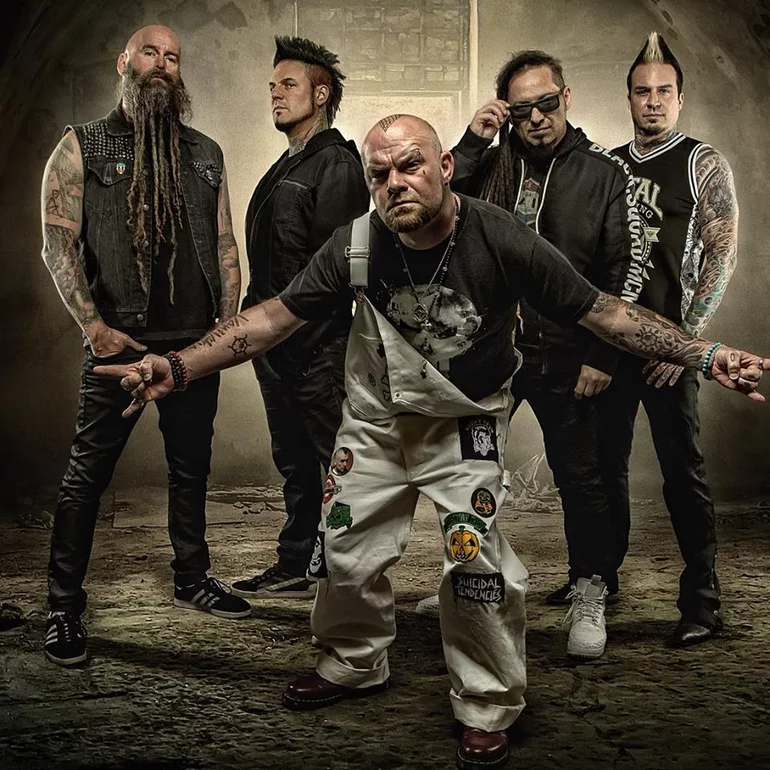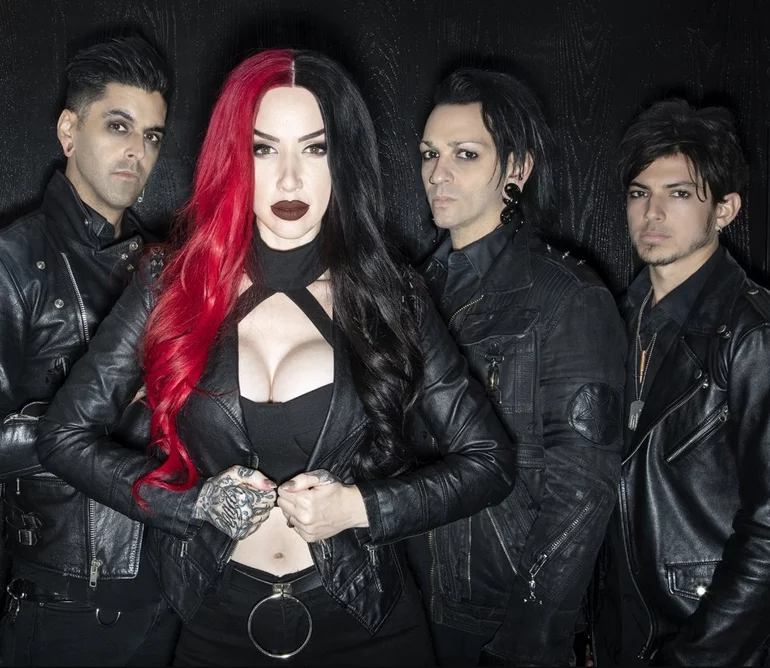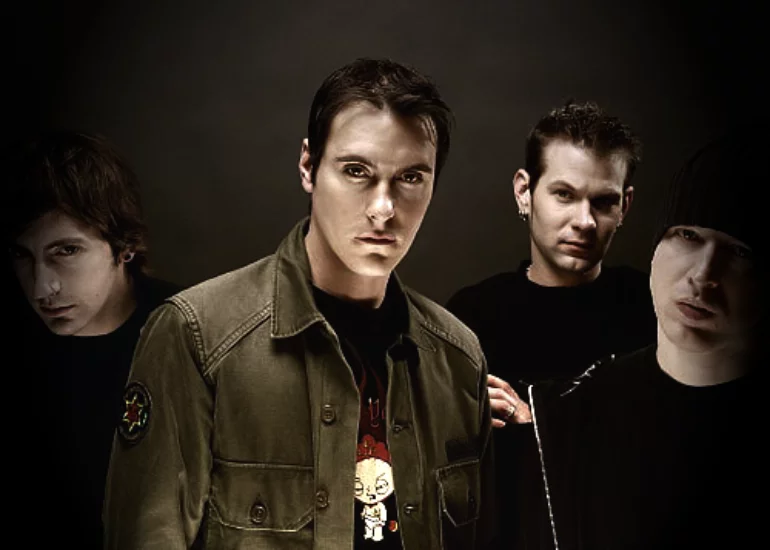


The name Breaking Benjamin does not conceal a philosophical metaphor. In the late 1990s, Benjamin Burnley performed at an open-mic night and, imitating Kurt Cobain, threw someone else’s microphone onto the floor. The equipment broke. The host thanked the musician with words to the effect of: “Thanks to Benjamin for my fucking broken microphone.” The phrase proved more useful than the device itself.
The first project called Breaking Benjamin appeared in 1998 and played relatively soft material, including songs by Weezer and The Beatles. It broke up after Burnley moved to California. Upon returning to Pennsylvania, the vocalist and guitarist formed a band called Plan 9 with drummer Jeremy Hummel—a reference to Ed Wood’s film “Plan 9 from Outer Space.” The audience constantly turned the name into “Planet 9.” That was when Burnley remembered that he still had a roll of old Breaking Benjamin stickers. Practicality defeated imagination.
In Wilkes-Barre, they were joined by bassists Jason Davoli and later Jonathan “Bug” Price. The trio caught the attention of Freddie Fabbri, a DJ at local rock station WBSX. He played “Polyamorous” on air, and the song became the station’s most requested track. Fabbri financed the recording of an independent EP, and all two thousand printed copies were sold.
Guitarist Aaron Fink and bassist Mark James Klepaski, formerly of Lifer, joined the lineup. At the beginning of 2002, representatives from more than ten companies arrived for a two-day live showcase. Breaking Benjamin signed with Hollywood Records and went to record their debut album with Ulrich Wild, who had worked with Static-X, Pantera, and Slipknot.
“Saturate” was released on August 7, 2002. It reached only No. 136 on the Billboard 200, although “Polyamorous,” “Skin,” and “Medicate” received significant radio airplay. The sound already contained the main elements of the formula that would follow: lowered guitar tunings, a dense post-grunge verse, a heavy transition, and Burnley’s melodic chorus. No revolution took place. But the band had developed a structure it would refine over the next two decades.
The album sold steadily and received an RIAA gold certification in 2015. After its release, Breaking Benjamin took part in the Jägermeister Music Tour and opened shows for Godsmack. It was not the fastest route to success, but active-rock radio rarely demands haste.
The second album, “We Are Not Alone,” was recorded with producer David Bendeth. Billy Corgan of The Smashing Pumpkins co-wrote “Follow,” “Forget It,” and “Rain,” and also played an additional guitar part on “Forget It.” The record was released on June 29, 2004, sold 48,000 copies in its first week, and climbed to No. 20 on the Billboard 200.
The lead single “So Cold” did not top the Mainstream Rock chart, but it remained there for 62 weeks. The bleak video, directed by Frank Borin, showed a man carrying a huge stone through a forest to the site of his own execution. No concert parties or expensive cars—only swamp water, a religious procession, and slow punishment. For a song with a radio-friendly chorus, the setting was fairly grim.
“Blow Me Away” was recorded separately for the soundtrack to the video game “Halo 2.” It played during the “Gravemind” level and eventually became one of Breaking Benjamin’s most recognizable songs, even though it was not included on a regular studio album. Later, that very composition would become central to the conflict that destroyed the band’s first stable lineup.
After touring, Jeremy Hummel left the band under unpleasant circumstances and later filed a lawsuit, claiming that he had been fired while on parental leave and had not been paid his rightful share of the income. Chad Szeliga took over on drums.
The title of the third album was connected to Burnley’s anxiety disorders. He spoke about a fear of heights, darkness, high speeds, illness, and especially air travel. As a result, “Phobia” opened with flight-attendant announcements and the sound of an airplane taking off, and ended with a similar unsettling sound sequence.
The record was released on August 8, 2006, and debuted at No. 2 on the Billboard 200, selling approximately 131,000 copies in its first week. “The Diary of Jane” became the band’s biggest hit, while “Breath” held the No. 1 position on Mainstream Rock for seven weeks. “Until the End,” “Dance with the Devil,” and “Evil Angel” followed.
Breaking Benjamin found an almost perfect balance between alternative metal and radio melody. Burnley did not possess the broadest range of vocal techniques, but he understood the drama of a chorus precisely. A quiet opening. Tension. Guitars crashing in. Another chorus, higher and louder. The formula was predictable, but it worked with an unnerving consistency that critics found difficult to ignore.
By 2007, Burnley was facing serious health problems. After three days of drinking alcohol, he woke up with weakness, dizziness, and impaired vision. The symptoms did not go away. The vocalist gave up alcohol, but chronic pain and neurological problems continued; despite consulting numerous doctors, he never received a precisely confirmed public diagnosis.
The album “Dear Agony”, released on September 29, 2009, was the first record Burnley made completely sober. A medical scan of his brain was placed on the cover. The songs “I Will Not Bow,” “Give Me a Sign,” and the title track dealt with illness, addiction, and the attempt to maintain control without the usual rock ’n’ roll romanticization of self-destruction.
“Dear Agony” reached No. 4 on the Billboard 200 and delivered the band’s strongest debut at that point—approximately 134,000 copies. The commercial peak coincided with a physical crisis. In the summer of 2010, Breaking Benjamin stopped touring, and Burnley nearly disappeared from public life.
During the hiatus, Hollywood Records prepared the compilation “Shallow Bay: The Best of Breaking Benjamin” and a new version of “Blow Me Away” featuring vocals by Sydnee Duran of Valora. According to Burnley, Aaron Fink and Mark Klepaski authorized the remix without his consent after the label offered them a payment of $100,000. Fink and Klepaski denied the allegations.
Burnley fired both men by email and sought compensation in court, along with exclusive rights to the name Breaking Benjamin. The compilation was released in August 2011, even though the frontman had publicly objected to the publication of altered and unfinished recordings. The dispute went to arbitration. In April 2013, Burnley announced that he had retained the rights to the name.
Chad Szeliga also left, citing creative differences. Of the team that had recorded “Dear Agony,” only one person remained. For a band named after broken equipment, the situation seemed almost excessively symbolic.
At the end of 2014, Burnley introduced a completely revamped lineup: guitarists Jasen Rauch and Keith Wallen, bassist Aaron Bruch, and drummer Shaun Foist. Three of the new members could sing, giving the live arrangements the layered harmonies that early Breaking Benjamin had often lacked.
“Dark Before Dawn” was released on June 23, 2015, consisting largely of material Burnley had written before the new quintet was officially formed. The album debuted at the top of the Billboard 200 with 141,000 equivalent units, including 135,000 pure sales. It was Breaking Benjamin’s best single-week performance and their first No. 1 on the main American chart after a six-year hiatus.
The single “Failure” topped Mainstream Rock for eight weeks. The comeback defied the industry’s usual logic: the band had lost almost its entire lineup, gone years without releasing music, and still sold more copies in a week than it had during its previous peak. The audience had not left. It had simply been waiting.
The sixth album, “Ember,” was created by the full lineup. The musicians wanted to make the material heavier than “Dark Before Dawn” without destroying its melodic foundation. The record was released on April 13, 2018, and reached No. 3 on the Billboard 200. “Red Cold River” and “Torn in Two” became leaders on active-rock radio.
The sound did gain weight: more screaming, denser guitars, and a more noticeable contribution from Rauch and Wallen. But Breaking Benjamin did not rush into progressive metal or electronic music. Their conservatism had long been part of the contract with their listeners. A new song had to sound familiar, but not like a direct copy of “The Diary of Jane.” A narrow corridor. The band walked through it once again.
In 2020, “Aurora” was released—a collection of acoustic and reimagined versions of earlier songs. Adam Gontier of Saint Asonia, Scooter Ward of Cold, Lacey Sturm, and Spencer Chamberlain of Underoath took part in the recordings. The only new composition was “Far Away,” featuring Gontier. Two years later, Breaking Benjamin and Starset recorded a new version of “Waiting on the Sky to Change.”
On October 15, 2024, Breaking Benjamin announced that they were moving to BMG, bringing their long-running relationship with Hollywood Records to an end. The following day, “Awaken” was released—the band’s first completely new song since “Ember.” It retained the familiar mechanics: a heavy riff, a restrained verse, and a large melodic chorus. After twenty years of successful operation, nobody was planning to replace the engine.
Work on the seventh studio album stretched over approximately four years. Some songs were re-recorded three times. The musicians completed the final vocal line in a temporary room during an American festival, using equipment they had brought with them on the road. By June 2026, the recording, mixing, and mastering had been completed.
Meanwhile, the drummer’s status changed. Shaun Foist stopped performing regularly because of complications from Hashimoto’s disease; in 2025, James Cassells of Asking Alexandria helped out on tour, while in May 2026 the live position was taken by Brian Medeiros, who had previously played with RED and Otherwise.
On May 9, at Welcome to Rockville, the band performed “Something Wicked” for the first time, and released the studio version on May 13. By August 2026, the musicians had already chosen the new album’s title and received the master files; the artwork was still being finalized, but a release date had not yet been announced. After several re-recordings, the final piece turned out to be a single vocal line recorded between festival performances. That is characteristic of Breaking Benjamin: even an eight-year hiatus ends not with a grand gesture, but with yet another carefully completed detail.