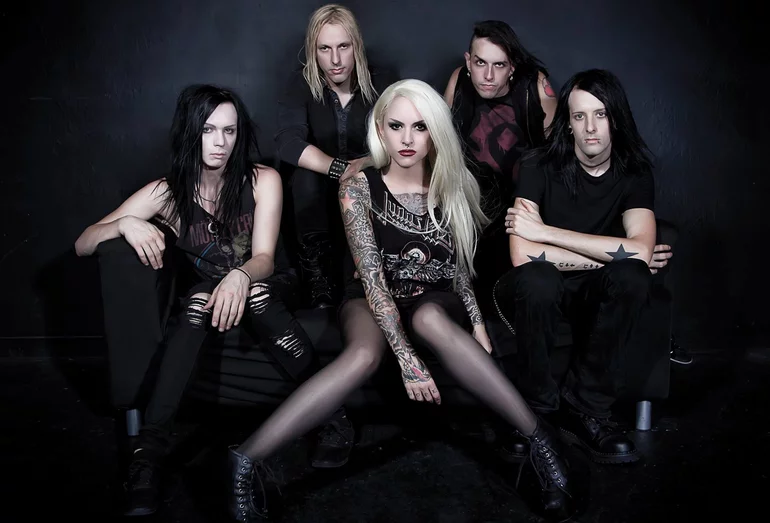

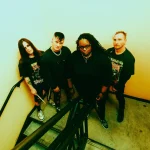

The future founders of Tetrarch met at a private Christian school near Atlanta. Josh Fore was already playing guitar and putting together a school band when Diamond Rowe asked to join. His reaction was, to put it mildly, less than heroic: Fore told the drummer that he did not want a girl in the lineup. The drummer persuaded him to hold an audition anyway. After the very first song they played together, the objections were over. Rowe turned out not to be a token guest, but a musician around whom Tetrarch would later build its recognizable sound.
The teenagers found the name not on the cover of a metal album, but in a history class. Tetrarchs were co-rulers who divided power over the territories of the late Roman Empire. There were four people in the band, and the schoolchildren had Napoleonic plans—the word fit. Fore and Rowe still argue about who first suggested writing it down.
Tetrarch formed in the Atlanta area in 2006–2007. At first, the musicians learned songs by Green Day, Metallica, and even Bob Seger, then shifted to original material with clear influences from thrash metal and early metalcore. Their first concert took place at 7 Venue in Douglasville. According to the members’ recollections, the young quartet played nearly a hundred shows in 2007. The method was old and fairly ruthless: small venues, their own equipment, long drives, and no guarantee that more than twenty people would be standing in front of the stage.
In the summer of 2008, Tetrarch released the EP Pravda, recorded by Matthew Washburn at LedBelly Sound Studio. The next single, Disciples of Sorrow, was created with producer Russ-T Cobb, who had worked with Sevendust and Butch Walker. Atlanta rock station Project 9-6-1 added the song to its rotation. For a band without a major label, this was more useful than a dozen enthusiastic reviews in obscure blogs.
On May 5, 2011, Tetrarch performed on the main stage at Atlanta’s Verizon Wireless Amphitheatre alongside Avenged Sevenfold, Seether, and Alter Bridge. The venue held approximately 12,000 people—a sharp jump from club shows. Around the same period, the EP The Will to Fight appeared, followed by Relentless in 2013. A quick record deal and a bus with the band’s logo on it did not materialize, however. For several more years, the group existed in a mode of independent touring and changing rhythm sections.
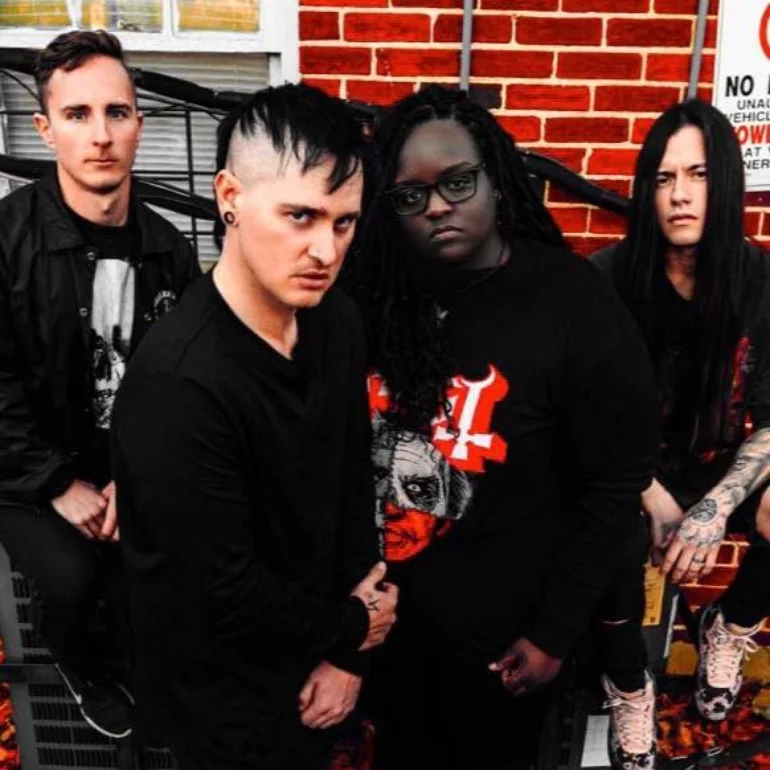
By the middle of the decade, Fore and Rowe had moved to Los Angeles. The risk was clear: in Atlanta, Tetrarch already had a local audience, while in California they had to find musicians, connections, and venues all over again. Gradually, the lineup stabilized, with bassist Ryan Lerner and drummer Ruben Limas joining the founders.
The debut full-length album, Freak, was independently released in 2017. The production was handled by the musicians themselves and Dave Otero, known for his work with Cattle Decapitation, Allegaeon, and Khemmis. The record appeared at an interesting moment: nu metal had already stopped being an insult, but its full revival was not yet obvious. Young bands mostly copied either sterile radio rock or intricate metalcore. Tetrarch chose low-tuned guitars, sharp syncopation, and large melodic choruses. In other words, the territory of Korn and Linkin Park—without pretending the 1990s had never existed.
The title track Freak reached the U.S. Active Rock Radio top 50, while I'm Not Right established the formula the quartet would later refine into a commercially viable form. The most important detail was Rowe’s guitar tone: an anxious, trembling effect that sounded simultaneously like a detuned synthesizer and a malfunctioning electronic signal. It emerged while working with the POD Farm software—the musicians found a sine wave chorus effect and planned to use it in only one song. In the end, the accidental sound became Tetrarch’s signature.
Diamond Rowe was not limited to atmospheric noise, however. Her solos drew on Kirk Hammett, Dimebag Darrell, and the thrash-guitar tradition—a rare approach for the new wave of nu metal, where virtuosic playing had long been considered almost bad taste. In 2019, Rowe became the first Black female guitarist to appear on the cover of the British magazine Guitar World. It was a symbolic moment, but behind it stood years of club work rather than slogans.
On April 30, 2021, Napalm Records released Tetrarch’s second album, Unstable. Otero handled production, recording, mixing, and mastering, while Fore and Rowe served as co-producers. The material was compact—ten songs in 36 minutes and 57 seconds. No progressive marathon. Negative Noise struck with an early-Slipknot-style mechanical riff, You Never Listen combined Korn’s nervous guitar with a large chorus, while Trust Me moved into a hazier, almost Deftones-like atmosphere.
The single I'm Not Right entered the Mediabase Active Rock Top 30 and accumulated millions of streams on digital platforms. Unstable itself debuted at No. 65 on the U.S. album sales chart, selling approximately 1,450 copies in its first week. The number was far from the platinum sales of the Follow the Leader era, but it accurately reflected the reality of the 2020s metal industry, where a band’s influence is measured not in boxes of compact discs, but in streams, festival slots, and SiriusXM rotation.
Critics regularly accused Tetrarch of sounding too much like Korn, Disturbed, and Linkin Park. The accusation was not entirely unfounded. The quartet, however, never presented its influences as secret information. Unstable worked not as a museum reconstruction of nu metal, but as an attempt to test its techniques on an audience that had grown up after Linkin Park’s classic lineup had broken up.
The next record had to wait until May 9, 2025. The Ugly Side of Me was again released through Napalm Records, with Dave Otero, Josh Fore, and Diamond Rowe serving as producers. Otero also mixed and mastered the recording. The album runs for 32 minutes and 31 seconds—ten tracks without filler interludes or conspicuously long endings.
The first sign of the comeback was the single Live Not Fantasize, released in September 2024. It was followed by Never Again (Parasite), on which Rowe performed lead vocals for the first time. Not backing vocals or a random scream into the microphone. A full debut. Her voice appeared again on the title track, expanding the familiar arrangement with Fore at the center.
On The Ugly Side of Me, Tetrarch did not abandon their spring-loaded riffs or their distinctive “painful” guitar effect. Amusingly, before recording, the musicians agreed to use it less often. The promise did not last long. The final noise on the title track was recorded so that, when the album is played again, it subtly flows into the opening of Anything Like Myself. A small studio trick from an era when listeners are more likely to press the replay button than turn over a vinyl record.